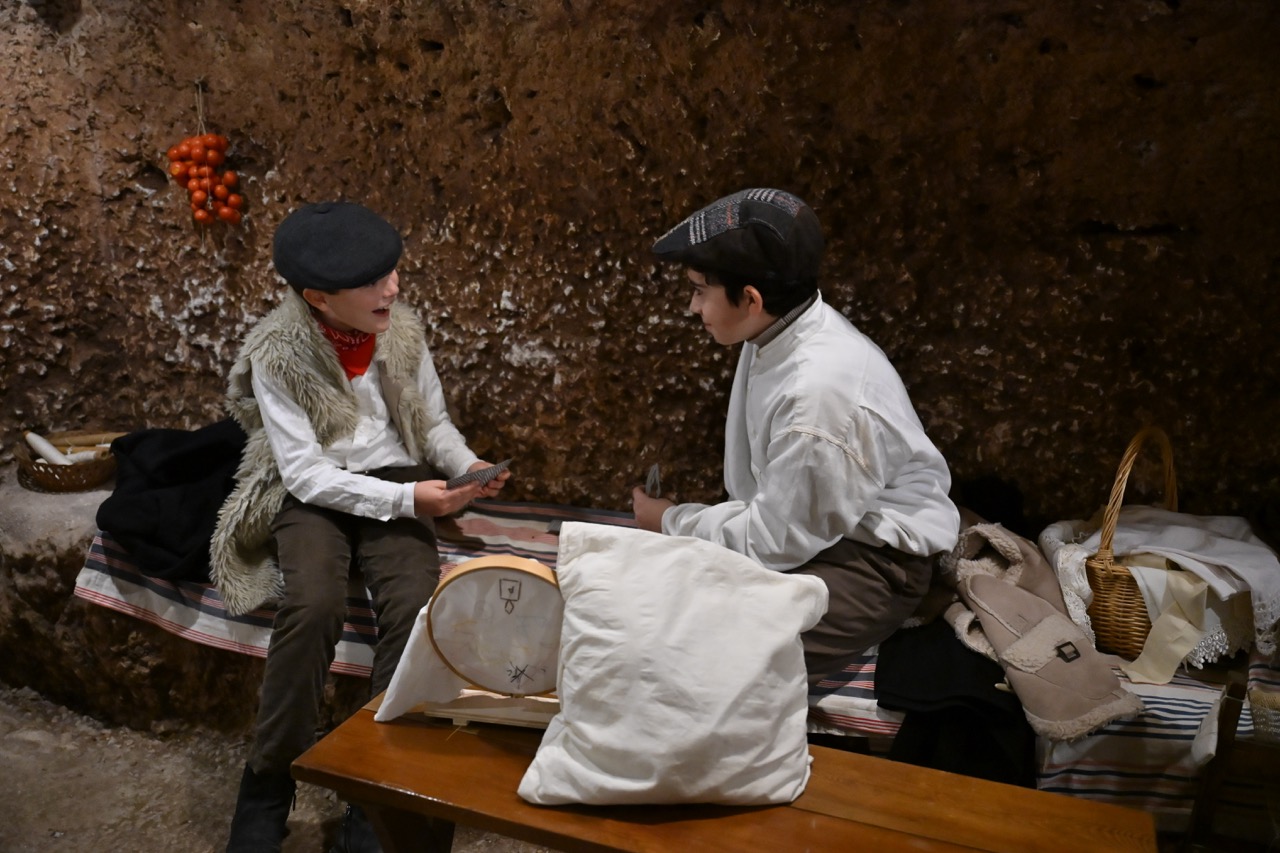
History and traditions · Clothing
How the farmers of Pezze di Greco dressed between the second half of the 19th century and the early 20th century.
"Our farmers, by reason of their trade, are hardened by the scorching suns of summer and the bitter frosts of winter, and so are resistant to the hardships of the different seasons of the year… they too are obliged to wear garments suited to the conditions and places in which they live and dwell… Farming families prepared, spun and wove the wool of their own sheep, the cotton and the linen of their fields, to make their homespun clothes…"
Vincenzo Chiaia, "Delle vesti e del modo di vestire dei contadini" (On the clothes and dress of farmers), La Puglia Agricola, July 1885
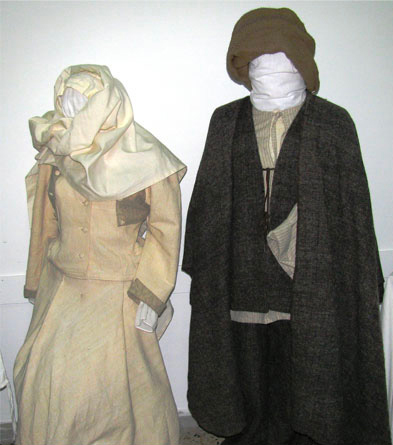
The detailed description of farmers' clothing in Vincenzo Chiaia's article, also documented in other sources, has allowed us to identify the general features of the clothes worn by the lower classes in southern Italy between the second half of the 19th century and the early 20th century.
The same kind of clothing was found by examining the material collected in the Pezze di Greco area. Although this material is more recent, it shows how popular dress, for economic and practical reasons, long kept features common to many regions, untouched by changing fashions.
Vincenzo Chiaia's article highlights the home production of fabrics, while also telling us about the textiles on the local market from Cisternino, Locorotondo and Alberobello which, alongside the fine wool and half-wool cloths of Martina, were used for festive clothes. It also notes the presence of finer industrially produced fabrics, such as muslin and silk, which could be bought at fairs or from pedlars, allowing a growing number of well-off farmers to bring their way of dressing closer to middle-class fashion.
The clothes
The article also notes how women of the middle classes or well-off farm women aped fashion, trying to imitate ladies' dresses with pads on the back which, according to the author, imitated a "Darwinian tail". Nonetheless, it points out that the working clothes of farm women and labourers followed practical models, reflecting the long life of a practical fashion suited to work.
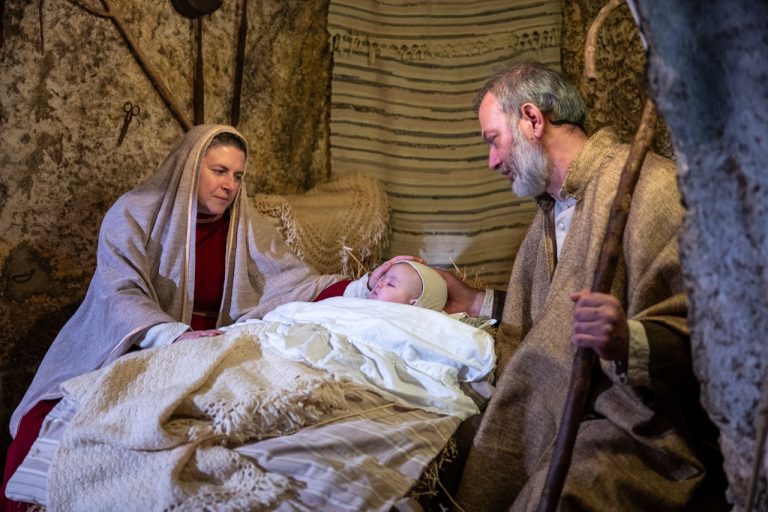
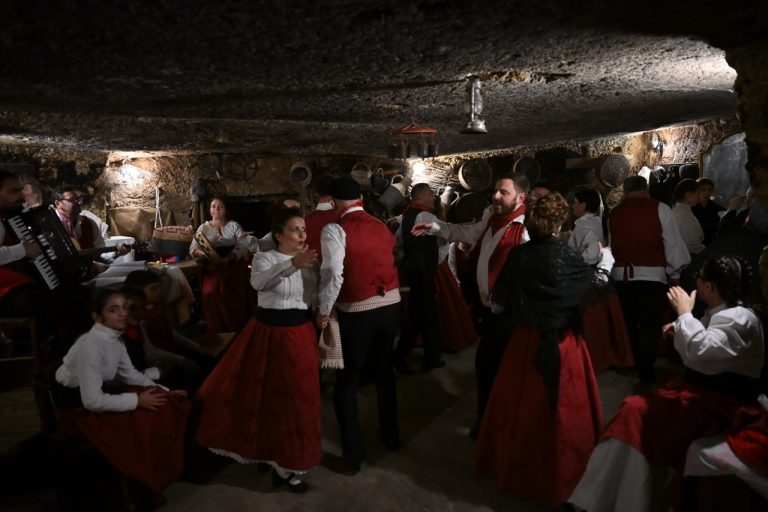
The fabrics used were light striped cloth and coloured check linen, with small geometric and floral patterns. The women's dress consisted of a bodice with sleeves, or a sleeveless one worn over a visible shirt. The skirt was "ruffled over the prominent hips", that is, gathered. The apron was made of white linen, and on feast days could be of wool or silk mixed with coloured wool. For work in the fields, a light hemp underskirt and a linen bodice were enough. From Vincenzo Chiaia's description, it can be assumed that the embroidered bodices from Pezze di Greco most likely served a double purpose, as underwear and as outerwear for work. Cowhide shoes were worn only on feast days, while work in the fields was done barefoot. To keep warm, besides woollen shawls, until the early 1900s women in this area wore rectangular covers of dark cloth or quilted matelassé fabric, tied at the waist with ribbons.
Hair was worn in a bun with braids interwoven with ribbons: scarlet for married women, black for unmarried girls and purple for engaged ones, held by silver or bone pins. The headscarf was tied in a triangle under the chin. Gold earrings with pearls and enamel, called fioccaglia, together with many other jewels such as a multi-strand gold chain with a clasp on the side of the chest, were worn only by well-off women such as the wives of masseria stewards and tenant farmers. Girls were allowed small earrings, a string of coral around the neck, a black velvet ribbon with a gold clasp, necklaces of coral paste or coloured glass with a small white bone cross acting as an amulet to stop bleeding, cure toothache and drive away the "fascino", that is, the evil eye.
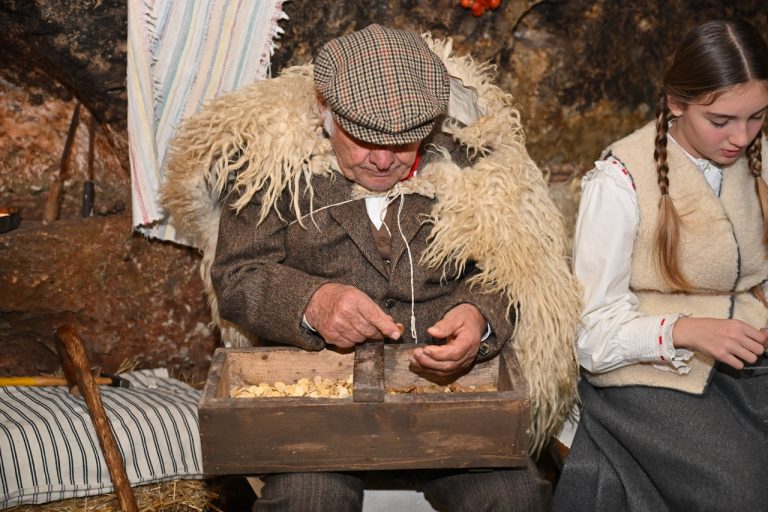
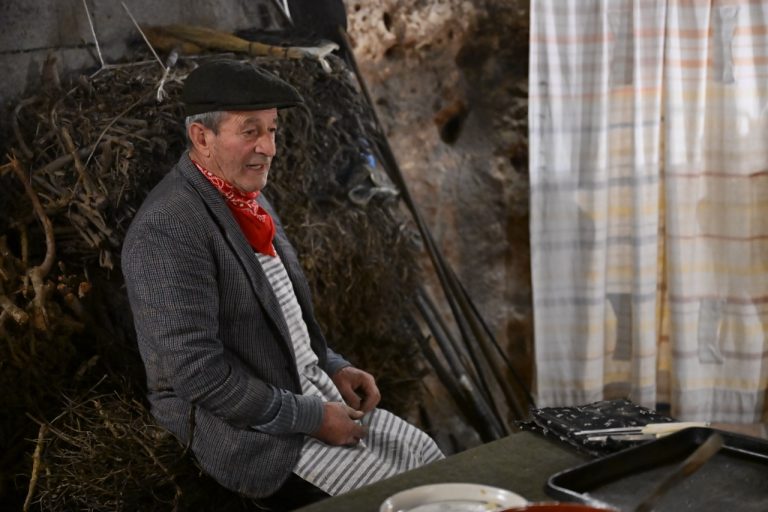
Men of middle standing, that is small landowners, masseria stewards, tenant farmers and craftsmen, dressed with a certain refinement, as they owned several kinds of clothes: in wool and half-wool for the winter, with a narrow-brimmed felt hat, and in cotton, light wool and hemp for the summer, with straw hats. Cowhide ankle boots for feast days and rough shoes for the countryside, and on display a pocket watch with a steel chain. It seems that some wore small gold rings in their ears, a custom that in some parts of the Bari area lasted until the 1950s to distinguish cart drivers.
Farmhands and day labourers, limited by their economic condition, wore the same kind of clothes in every season. They were made of striped cloth or half-wool dyed blue or green, also called langhì. In the harsh winter, to protect themselves from the cold, besides a short cape they wore one jacket over another. On their heads they wore a conical knitted cap. For work in the fields they wore only a shirt and long cotton or hemp drawers, without shoes and with a large straw hat.
From the information in Vincenzo Chiaia's article and from other documentary sources such as dowry contracts, photographs and items of clothing, it is therefore possible to identify how the different social classes of our area dressed, making it reasonable to suppose that the clothes of the craftsmen and farmers of Pezze di Greco also followed the models found throughout the region, while keeping some individuality thanks to fabrics which, being largely homemade, could express personal taste and local character. With the features of its own time and place of origin, clothing marked the boundaries of the community it belonged to, communicated the use for which it was intended and met the aesthetic expectations of a community, without neglecting personal taste and individuality.
Rita Faure
Lecturer in Costume for the Performing Arts at the Academy of Fine Arts of Bari
Keep exploring